
Why Do Patients Travel for Healthcare?
There is no single medical-tourism patient.
Some people travel because they are seeking specialist expertise.
Others are looking for another medical opinion.
Some need access to a particular technology, procedure or multidisciplinary team.
Others may be considering waiting times, affordability or provider availability.
For another family, geography, language and the ability to remain close to relatives may be decisive.
This is why two patients with seemingly similar diagnoses may make completely different international healthcare decisions.
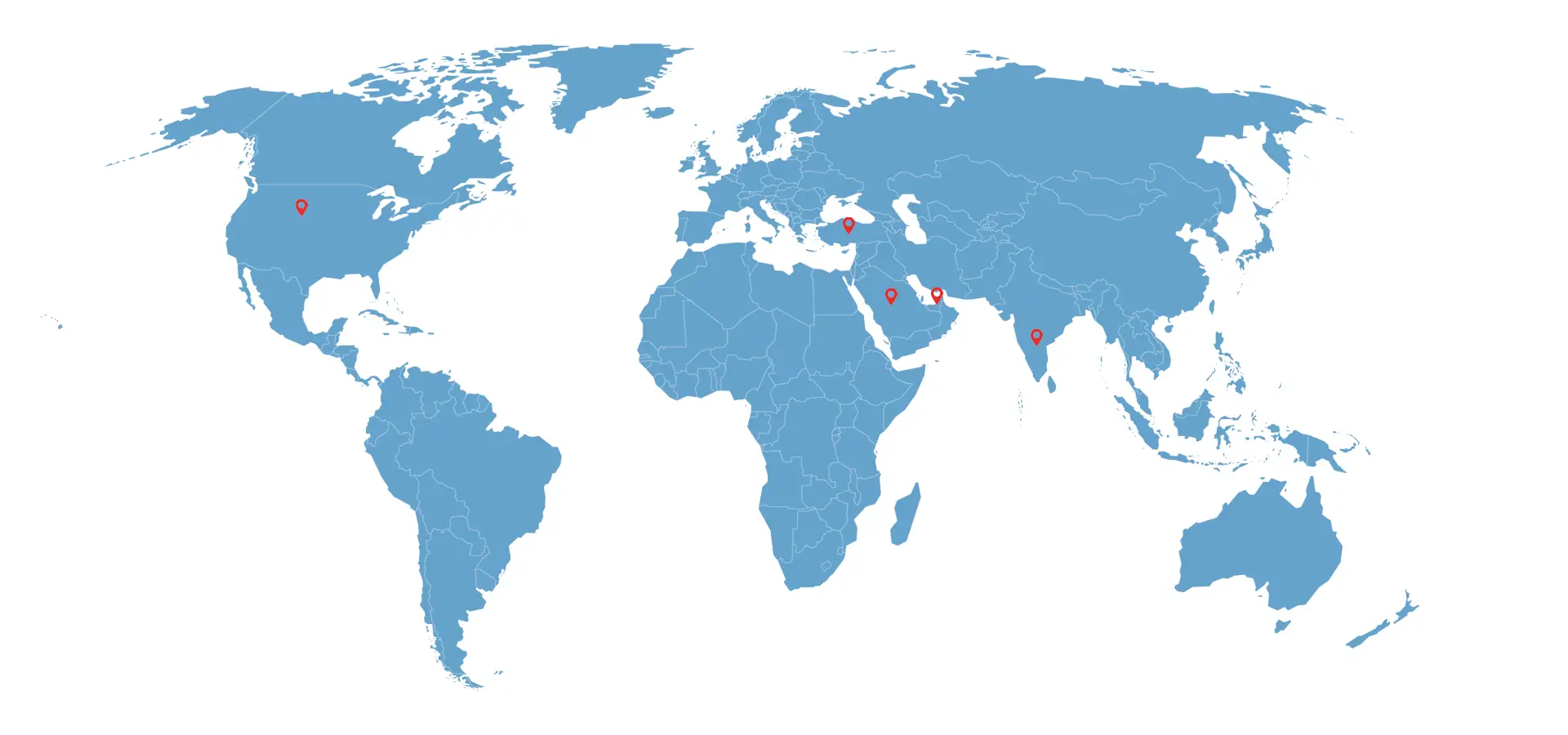
United Arab Emirates
The United Arab Emirates has developed a substantial healthcare ecosystem across Dubai, Abu Dhabi and other emirates.
Its geographic position and international aviation connectivity also make it accessible from many parts of the Middle East, Central Asia, Africa, Europe and Asia.
Depending on individual provider expertise, international patients can explore care across oncology, cardiology, orthopaedics, fertility, paediatrics, neurosciences, ophthalmology, rehabilitation and other specialties.
Dubai is also developing a more integrated approach to the medical-visitor journey, including closer cooperation between healthcare and immigration authorities.
For PFW, the UAE is particularly important because we can support both sides of the ecosystem:
Patients already living here.
And patients travelling here for healthcare.
India
India has one of the world's most extensive medical-travel ecosystems.
Large hospital networks, specialist availability, English-language capability and different cost structures have contributed to its international-patient sector.
Patients consider India across areas including oncology, cardiac sciences, organ and bone marrow transplantation, neurosciences, orthopaedics, fertility and paediatric care.
However, choosing “India” is not enough.
Delhi, Mumbai, Chennai, Bengaluru and other cities contain many different hospitals and specialist teams.
The provider and physician need to be considered in relation to the actual case.
Thailand
Thailand has long served international patients and has developed significant infrastructure around medical travel.
Bangkok in particular contains hospitals with established international-patient departments.
Patients may encounter Thailand while researching health screening, orthopaedics, fertility, dental care, rehabilitation, bariatric care and elective procedures, among other services.
But popularity is not medical suitability.
The same principle applies:
Destination first is the wrong sequence. Medical requirement first is the better sequence.
Türkiye
Türkiye—and Istanbul in particular—has become highly visible in global medical travel.
Dental treatment, hair transplantation and cosmetic procedures receive substantial international attention.
But Türkiye's healthcare ecosystem extends considerably beyond those categories.
International patients also investigate fertility, ophthalmology, orthopaedics, oncology, cardiac services and other areas.
Advertising visibility should not be confused with clinical relevance.
Patients should still investigate the actual provider, physician, accreditation, proposed pathway and estimate.
United States
The United States can enter consideration for very different reasons.
International patients may investigate major academic medical centres, highly specialized physicians, complex multidisciplinary care, rare diseases, precision medicine, advanced diagnostics, clinical trials or specialist second opinions.
Cost and logistics can be significant considerations.
For this reason, where a provider permits it, an initial remote review or consultation may sometimes be worth exploring before travel.
Europe Is Not One Medical Destination
Europe should not be evaluated as a single healthcare market.
Germany, Spain, Switzerland and the United Kingdom have different healthcare systems, providers and areas of international-patient activity.
Germany may enter searches involving oncology, neurosciences, complex diagnostics and rehabilitation.
Spain is visible in reproductive medicine and other specialist areas.
Switzerland has a significant private-healthcare, diagnostic and rehabilitation ecosystem.
The United Kingdom includes major private and academic institutions across numerous specialties.
The question is therefore not:
“Is Europe better?”
It is:
Which provider, specialist and healthcare system is relevant to this particular patient?
Seven Questions for Comparing Destinations
1. Does the destination have relevant specialist expertise?
Start here.
Not with hotel prices.
Not with Instagram.
Not with airfare.
2. Can an appropriate provider review the case?
Before travelling, understand whether records can be assessed and what information is required.
3. Is another specialist opinion useful?
For some patients, obtaining another opinion before selecting a destination can change the entire journey.
4. What will treatment realistically cost?
Compare actual provider estimates where available rather than relying only on headline internet prices.
5. How practical is the journey?
Consider visa requirements, travel time, accommodation, companions, recovery and return travel.
6. What happens after treatment?
Follow-up and continuity are essential parts of international healthcare.
7. Who coordinates the journey?
A complex international case may involve several providers, multiple appointments and considerable documentation.
Someone needs to keep the practical journey connected.
There Is No Universal Best Country for Medical Treatment
Healthcare is too individual for that.
The right destination depends on the patient's diagnosis, required expertise, available providers, timing, finances, travel circumstances and personal priorities.
The goal should not be to find the most famous country.
The goal should be to make a well-informed healthcare decision with qualified medical professionals.
Patients First Worldwide: One Starting Point, Multiple Destinations
Patients First Worldwide supports patients navigating healthcare within the UAE and internationally, including India, Thailand, Türkiye, the United States and destinations across Europe.
Our role is coordination.
We help organize the practical pathway between the patient and healthcare providers while keeping medical decisions where they belong—with licensed healthcare professionals.
Not sure which destination to explore? You do not need to choose the country before starting the conversation. Request a PFW Coordinator Call.
Need a Hand with the Practical Side?
Our coordinators can help you understand the practical next steps, organise your information and navigate the healthcare journey.
Talk to Our TeamImportant Legal Notice
Patients First Worldwide is an independent patient support and healthcare coordination company. We do not provide medical advice, medical diagnoses, or medical treatment. Clinical decisions, treatment recommendations, and medical care remain the sole responsibility of licensed healthcare professionals and healthcare providers chosen by the patient.